Your battery can do more than store solar.
The difficult part is not charging a home battery. It is deciding when to charge it, when to keep energy for later, when to power the house and when exporting might make more sense.

Plan energy around what tomorrow is likely to look like.
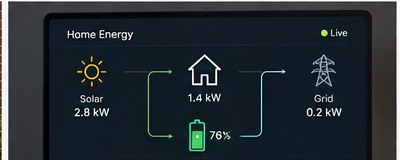
An optimisation system can combine changing electricity prices, predicted solar generation, expected household demand and the current state of the battery. It then keeps recalculating a plan as those inputs change.
Hold
Power the house
Export
Not just “charge overnight”.
Charge the battery.
Leave room in the battery for free generation.
Run the house and store the surplus.
Use stored energy rather than buying expensive electricity.
Where appropriate, exporting some energy may be worthwhile.
Recalculate the plan.
This is an illustrative example. The best strategy depends on tariff, equipment, forecasts and household demand.
PredBat is one tool we can use.
PredBat is an open-source home-energy optimisation system that works with Home Assistant and compatible battery systems. It can calculate charging and discharging plans using tariff prices, predicted solar generation, expected household consumption and the capabilities of the inverter and battery.
PredBat itself is not the service. The useful work is understanding the home, integrating compatible equipment, validating the data, configuring the optimisation, commissioning it properly and making sure the household can understand what it is doing.
Can optimisation pay for itself?
~£267/year
Typical additional annual saving currently reported by PredBat for small-to-medium battery systems.
Up to 29%
Reported bill reduction in its user data. Results vary significantly between homes.
Measure it
Where the system allows it, we prefer actual performance data to heroic savings claims.
Third-party PredBat figures, not a Guildford Home Automation guarantee. Actual results depend on tariff, consumption, solar generation, battery, inverter and other factors.